
Agua Verde (Monday):
We're on Baja time
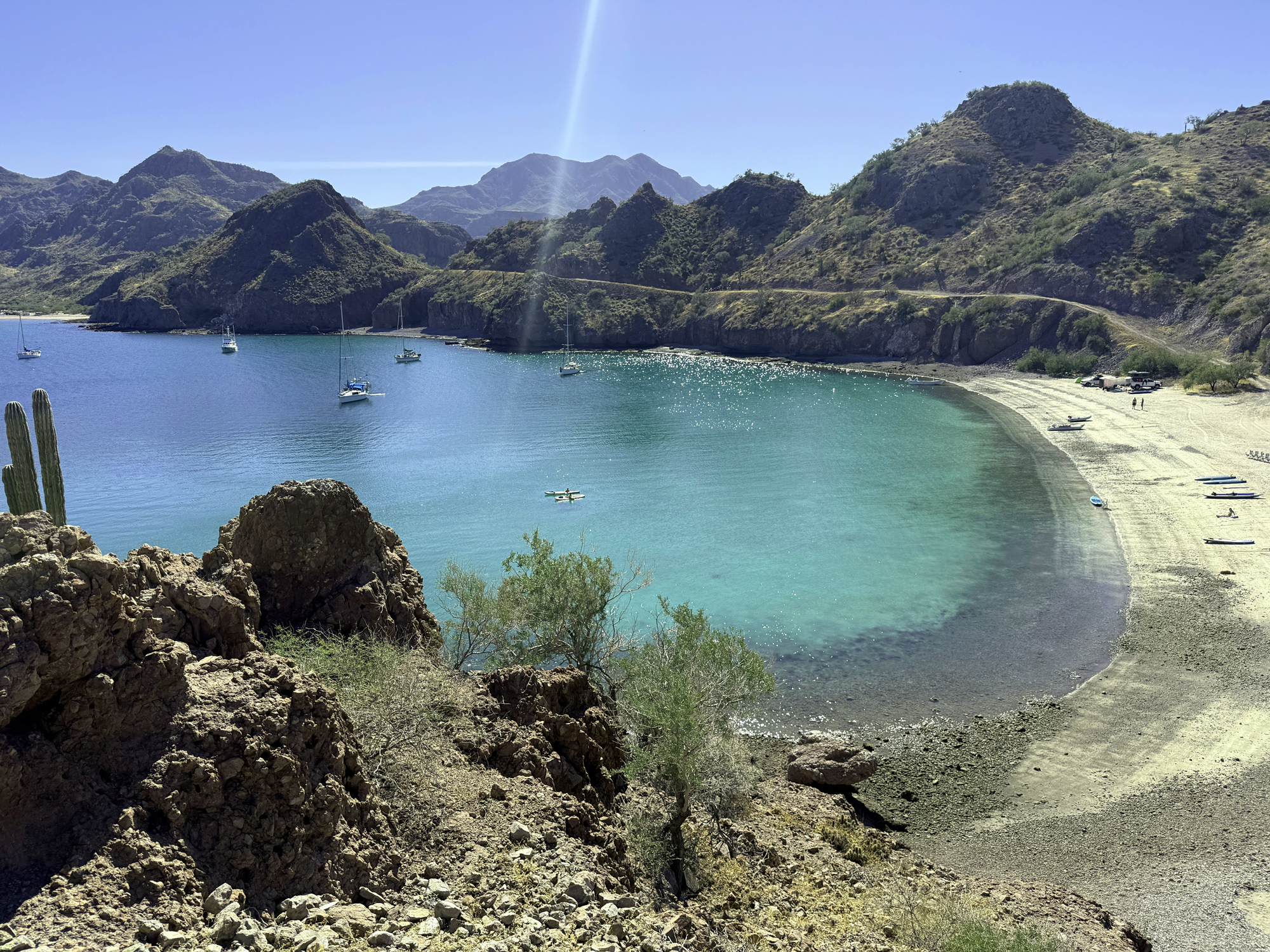
We awake Monday morning anchored at Agua Verde. Now, “verde” being one of the few Spanish words I know, I might expect the waters of Agua Verde to be green… ish… in color. And they are a bit. They are in fact a brilliant turquoise blue. Chatting with Daniel, I learn that, while Agua Verde translates to “green water”, the green in this instance refers to the water being clean, fresh, and full of life.
For whatever reason, I did not sleep well the night before, and am still in bed when Margaret heads up to morning stretches at 7:00 (good thing we didn’t sign up for the early morning skiff tour!). I push it as late as I can, before a quick shower, and then it‘s down to breakfast. This is part of what I love about the Uncruise experience; other than the major meal times, and making sure you catch the last skiff back to the boat, you really are free to make up your own schedule. You can choose to take in the Early Riser Breakfast in the lounge, or morning stretches, or any of the other activities, or not. Even though we “signed up” for specific off-boat activities last night, that’s not a firm commitment. We can change our minds overnight, and decide to do some other activity, or skip them altogether. We are, afterall, on vacation. And Terra is an expert at last minute updates to activity rosters and fitting everyone in.
Even so, we tended to stick to the activities we signed up for. Moreso because they still seemed as interesting at first light of day as they did the night before, than any pressure from the crew.
Two ships
As such, after a hearty pancake breakfast, I go to prepare for a morning of kayaking, and Margaret a morning of hard hiking. Our respective groups assemble on the Aft 400, waiting for the fantail to be ready so we can disembark.
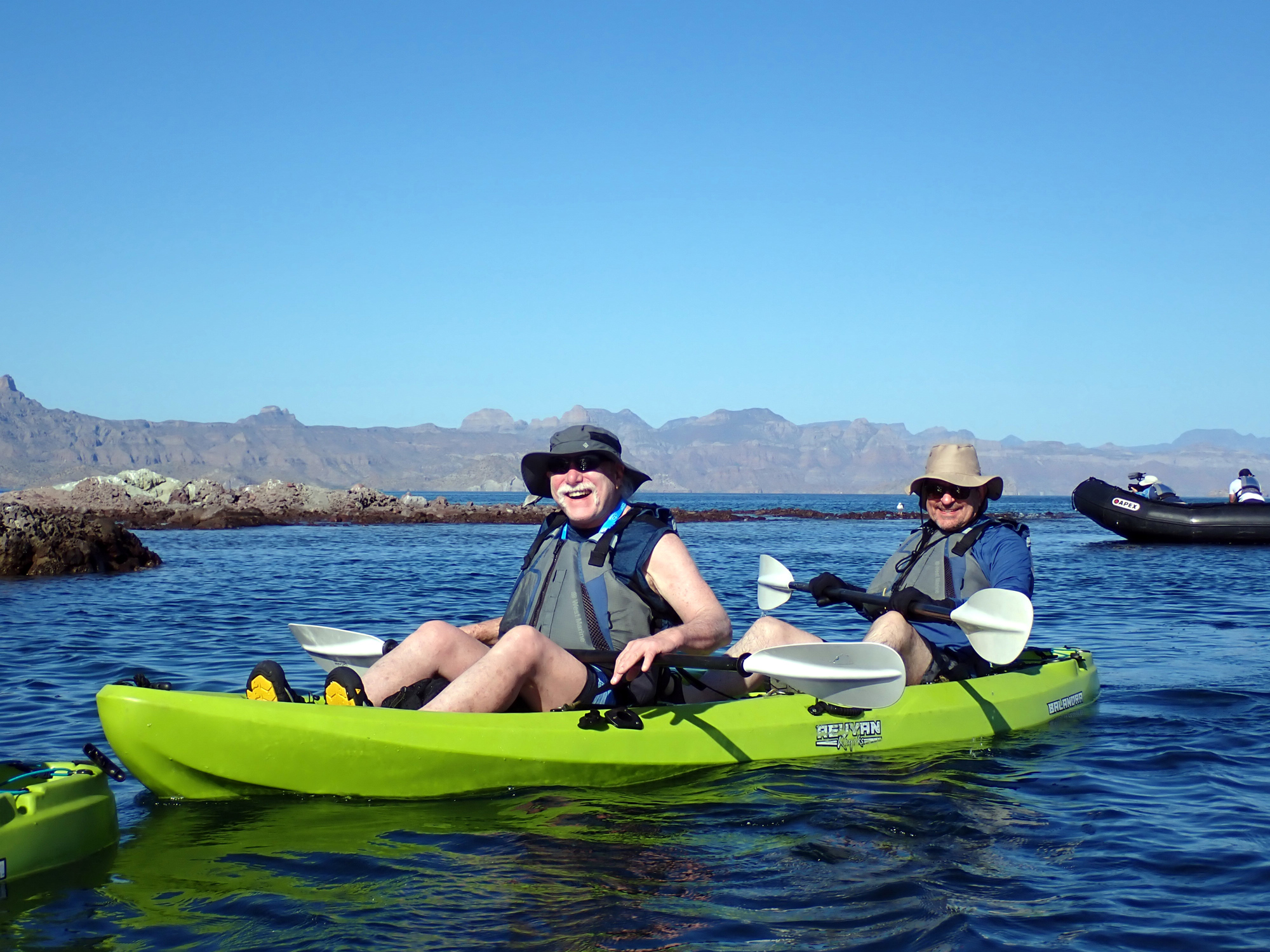
Since the guest kayaks are tandem, and Margaret isn’t joining, I’m paired with David. Dave is one of the first fellow passengers we recognized by name, because he bears a striking resemblance to David Crosby, with many of the same mannerisms. He’s a stout, jovial, retired civil engineer with long white hair, broad white Fu Manchu mustache, and a gentle, friendly soul with a hearty laugh. He will be a welcome kayaking companion.
Also set to kayak is the Porthole Magazine crew. Bill and Felipe will be in a kayak, with the rest of the crew in a skiff to capture footage. This is somewhat unusual. Typically kayaking on an Uncruise activity doesn’t involve a support skiff, but they promise to stay out of the way, and it means the rest of us will be movie stars, so it’ll be an interesting addition.
Since the hard-charger hike is anticipated to be the longest of the morning activities, they are in the first skiff out at 8:30, headed for the point to the East. The kayakers pile into the second skiff, about 30 minutes later, and set out to the beach due West, where the Safari Voyager crew have already beached all the kayaks on the sand.
“Pick us out a good one, Dave”
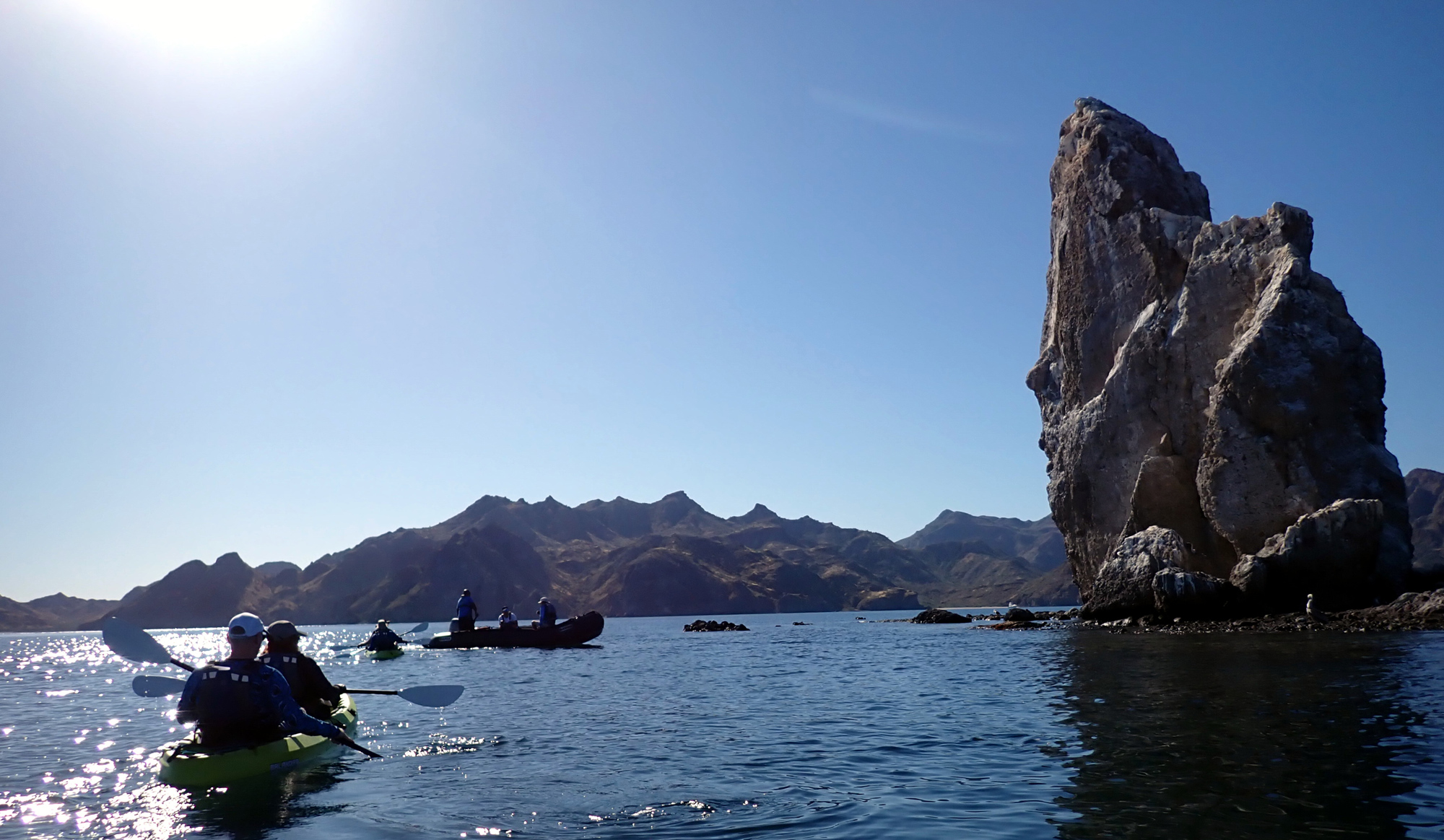
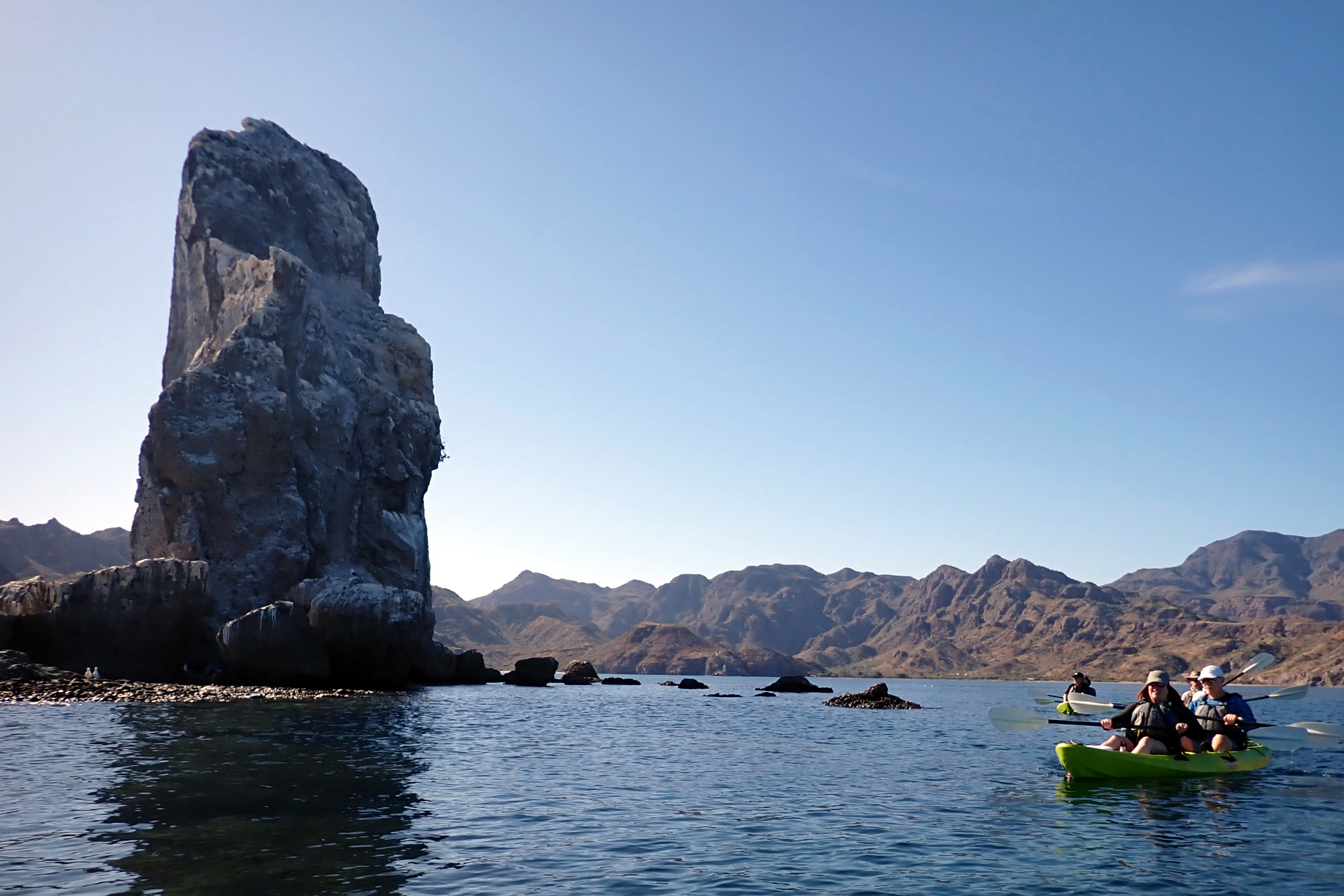
We arrive at the beach, choose some paddles and a kayak, then Mereth gives a brief introduction to kayaking for those who don’t yet have experience. The guides make it easy to boat up, steadying the kayak as we climb in - Dave opted to sit in front, while I took up the rear - and pushing us back to slip us into the surf. As each boat hits the water, we wait for everyone else to join us, before Mereth makes her way out in her single kayak, and the skiff begins to slowly circle the group.
The water is calm and smooth as we paddle along the rough edge of the point north of the beach. Well pull in tight to the shore, mindful of underwater reefs and bars hidden just inches below the surface. The shoreline is fascinating, much of it looking almost like poured concrete. Sheer angled walls broken off, with bits of aggregate inside. Waves had eroded away some of the bottom edges into large scallops, making some of the lone spires and rocks look like large mushrooms. The sea life included the same damsels and angelfish we saw during our snorkeling, as well as a good look at the many jellyfish, needlefish, different types of sardines, and seastars. Topside we saw black cormorants, brown pelicans, frigate birds, yellow-footed gulls, and the omni-present turkey vultures.
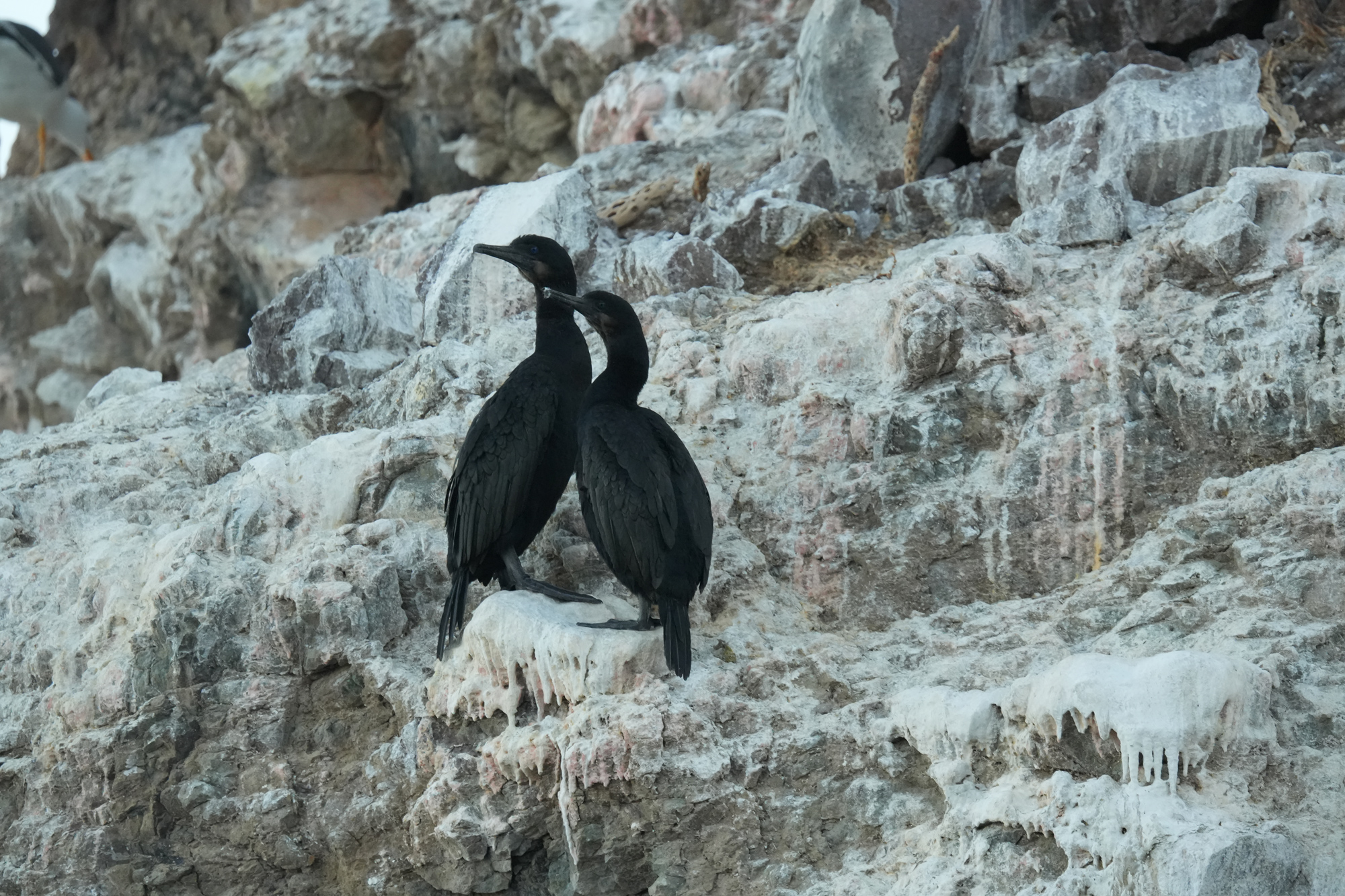
After following the shore for nearly an hour, we turn and head further out toward sea, toward a massive rock called the “Solitary Spire”. Apt name. Nearly 100’ tall and only half as wide, it stands several hundred yards offshore as a lone monolith. Birds love the rock as a safe, predator-free respit, as evidenced by the fact that nearly the entire island is covered in white bird guano, affectionately known as “Mexican snow”. We circle the rock in our kayaks, briefly spotting a pair of blue-footed boobies, a favorite of guides and guests alike, before paddling hard back to shore.
On our way back, we spot the burros from the morning activity coming down the ridge of the mountain. The sea had started to swell just a bit, and Bill’s kayak had drifted west, in no small danger of being raked across the reef that was really now only visible when the waves were at their lowest point. Mereth calmly met their boat and guided them around, before we each took individual turns building up speed and steering in to beach our kayaks once again in the sand. And, as before, the guides pulled us up, stabilized the boat, and made an awkward dismount nearly effortless.
The burro contingent had already made it down the mountain by the time we reach our beach chairs, and we join up to talk about each others experiences. The coolers of beer and soda are already out on the beach for refreshments, but I decide to return to the ship, dry up, and camp out on the lanai with a cocktail to wait for Margaret’s skiff.
“Meanwhile, on the other side of the bay…”
[Margy’s description of the hard-charger hike]
“And back on the Safari Voyager…”
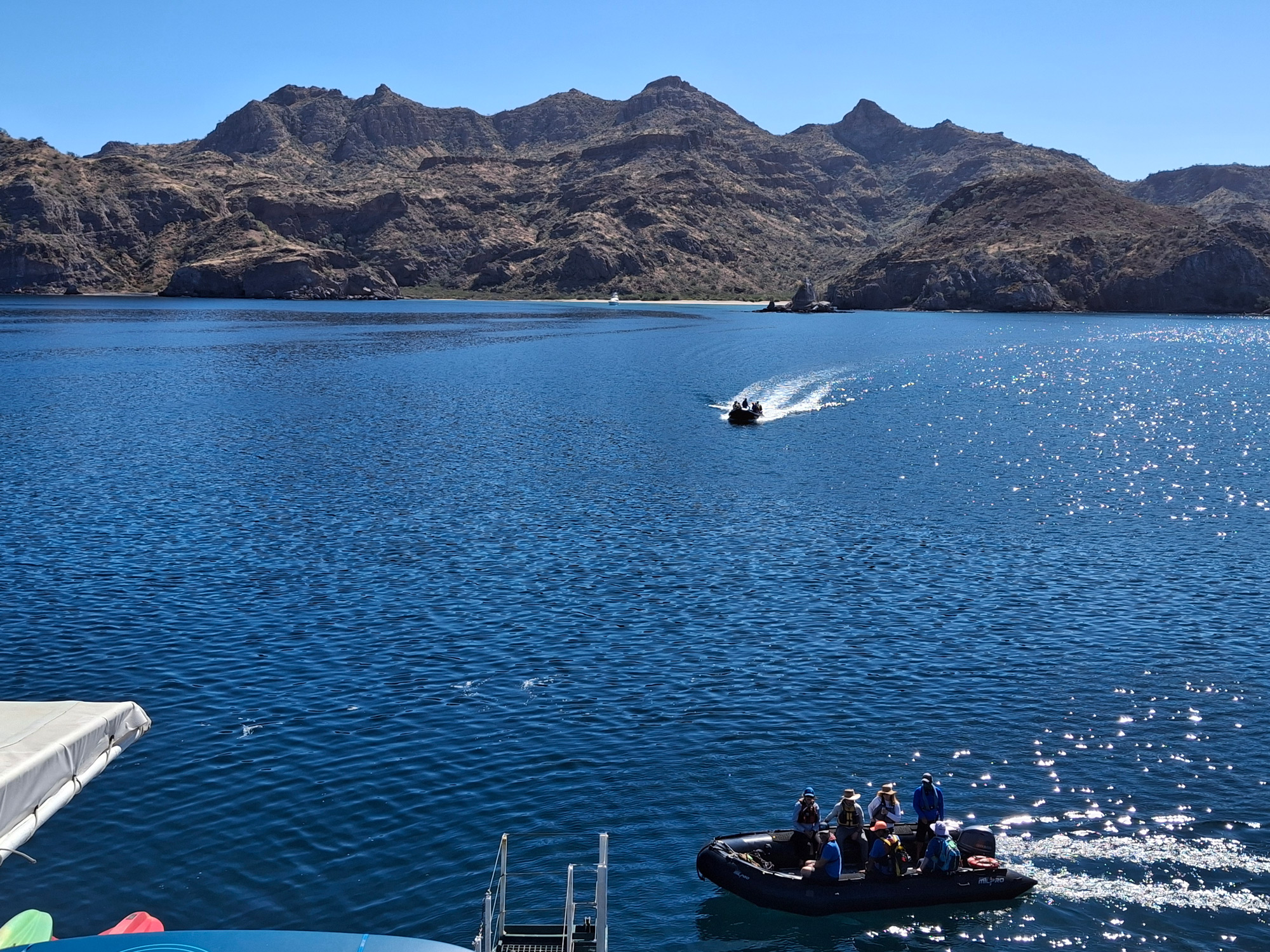
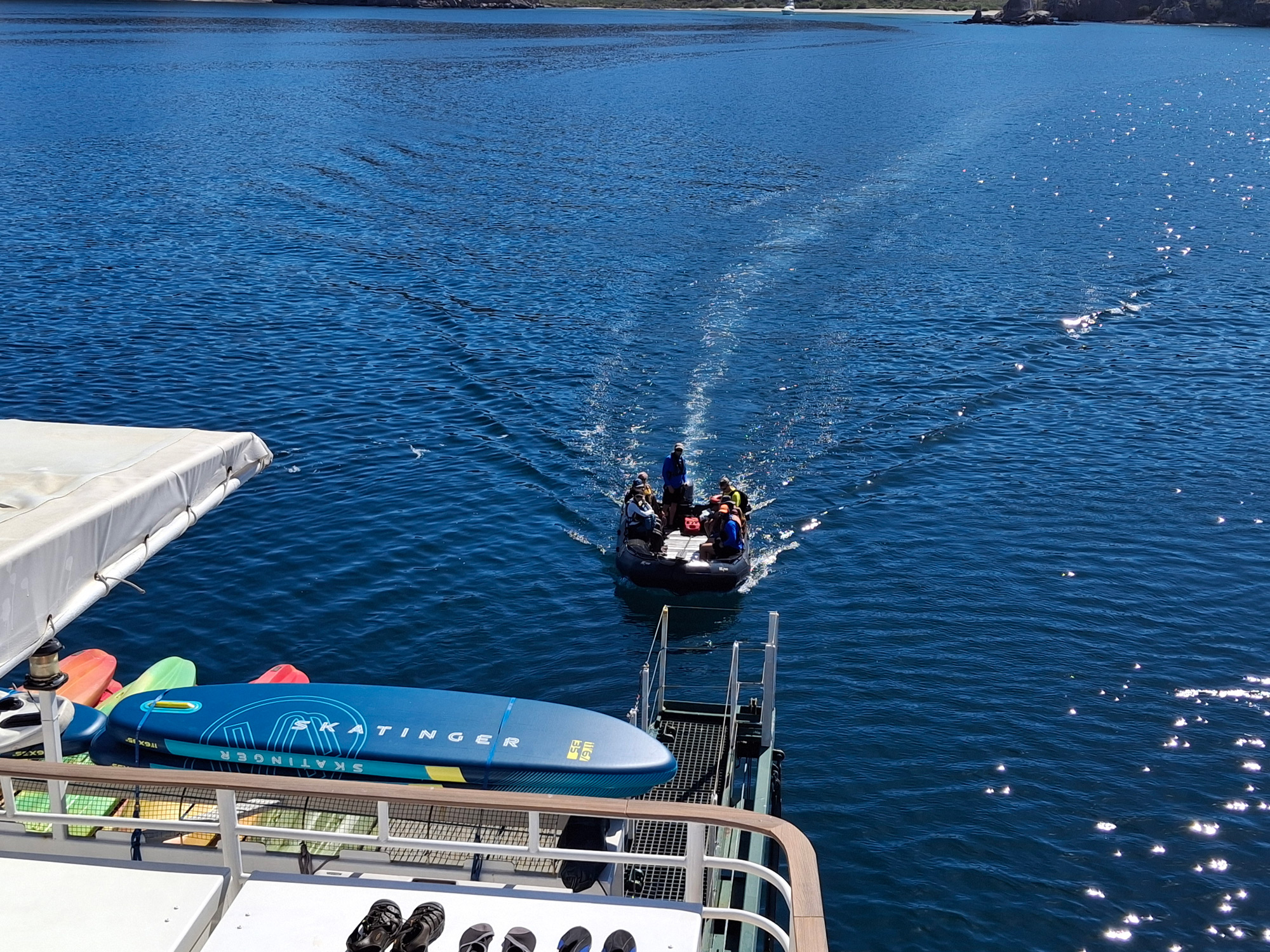
From my vantage point on Aft 300, I hear the radio call to the fantail to expect the hard charger hikers to get to the eastern beach in the next 10 minutes, so the crew comes alive down below, readying a skiff, lowering the launch platform into the water, and off it goes to pick up the hikers.
Through the binoculars, I can see the group filtering out of the tree line and dropping down into the “town” of Agua Verde. Town is, admittedly, a bit of an exaggeration. Agua Verde consists of about a dozen adobe buildings, all contained along the length of the beach. From what I can see, it’s several residences, a store, and perhaps a small church. But it’s also, really, the only sign of civilization we will see for much of the trip.
Before long, comes the sound of the hydraulic deck raising the skiff out of the water, and a short time after that, the hikers begin filtering up to the lanai. Everyone seems pleased and well-tired from the adventure. Once back aboard, the crew begin preparations for lunch, and we all return to our cabins to get out of the way.
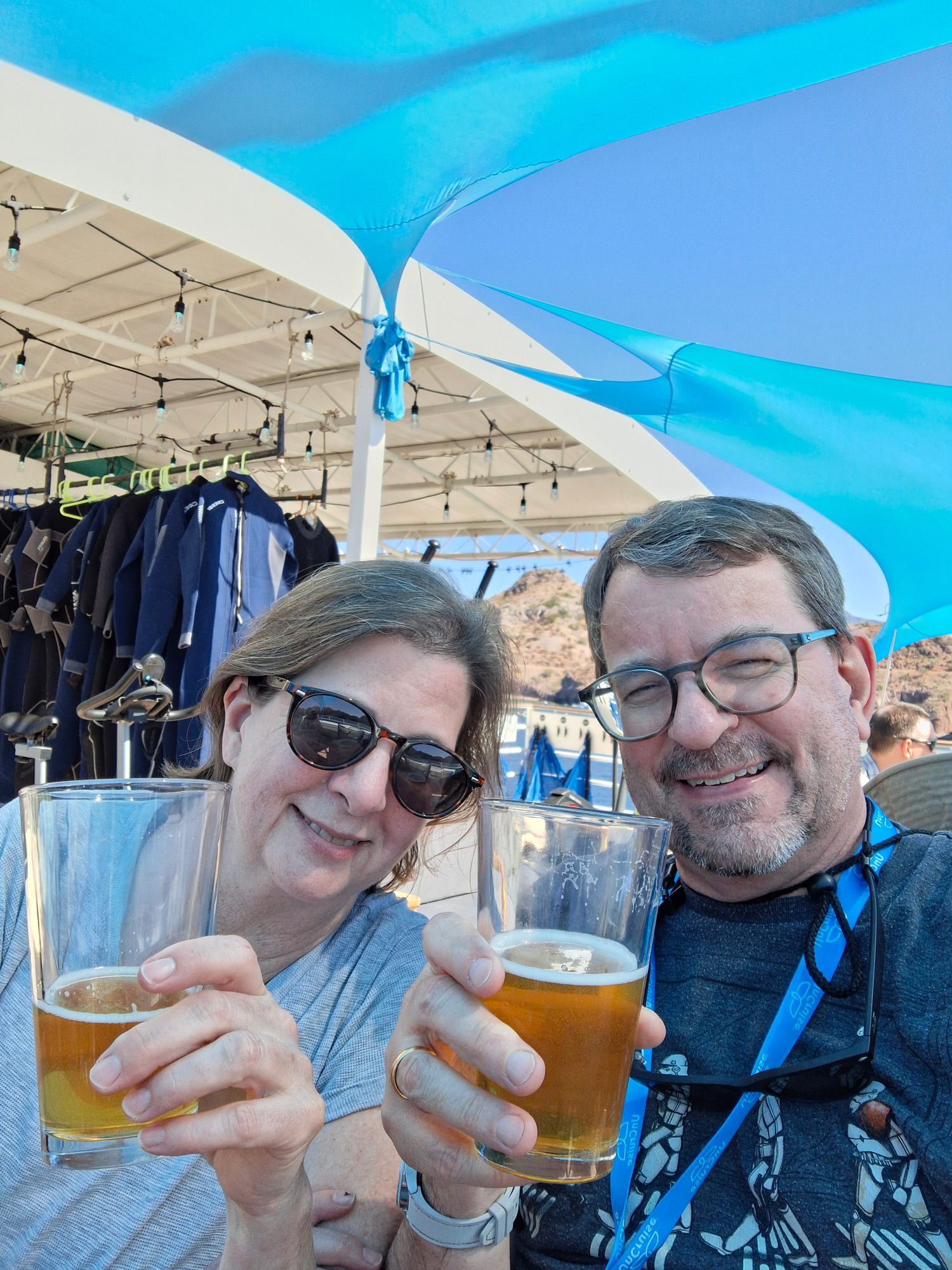
Lunch is a bit special, today. Instead of eating in the dining room, the crew has pulled the BBQ buffet up to the lanai of Aft 300, and have set up shade sails up on Aft 400 for even more seating. There are juicy, tender baby back ribs, fish, cornbread, corn-on-the-cob, incredible gourmet Mac & Cheese, and lots and lots of BBQ sauce. We choose a table on the 400 deck with 3 other couples, and have delightful conversation about the weather back home, which to a tee everyone says is cold, snowy and dreary. But here, eating delicious BBQ in the middle of the Sea of Cortez, the warmth of the sun and light breeze, none of us miss the winter at this moment. Finally, with lunch cleared, it’s time to think about our next activities.
Bursts of beaden
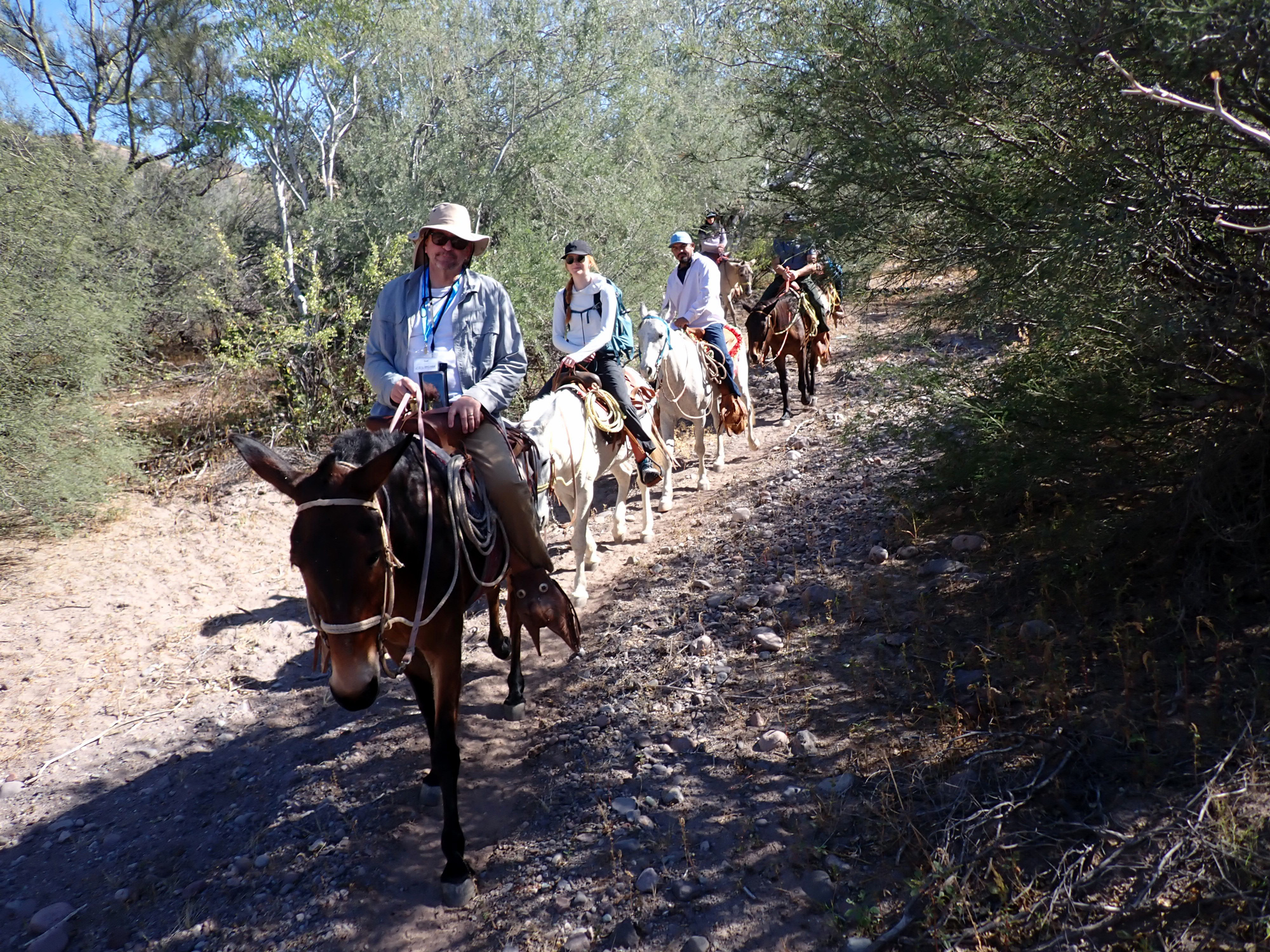
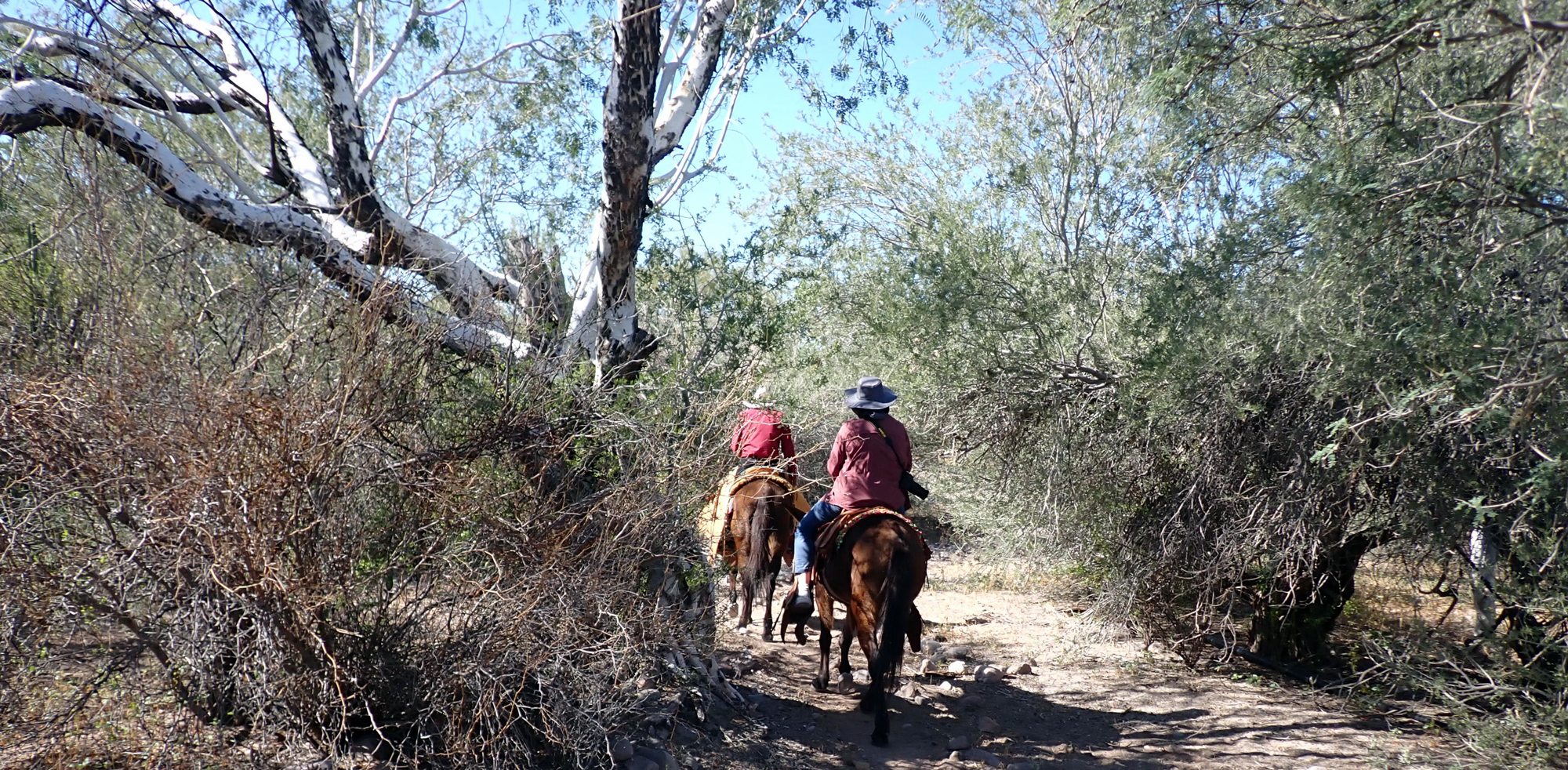
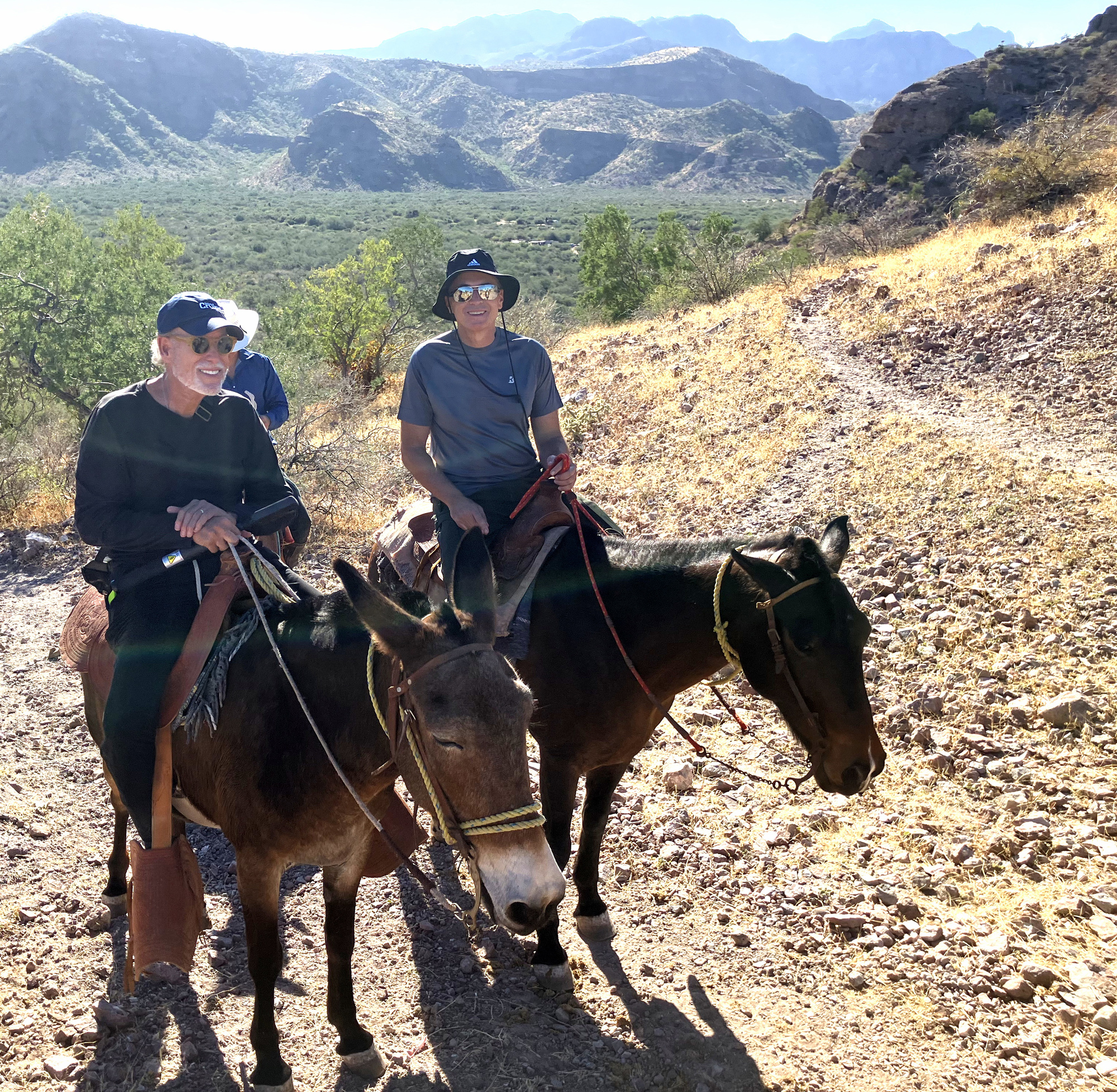
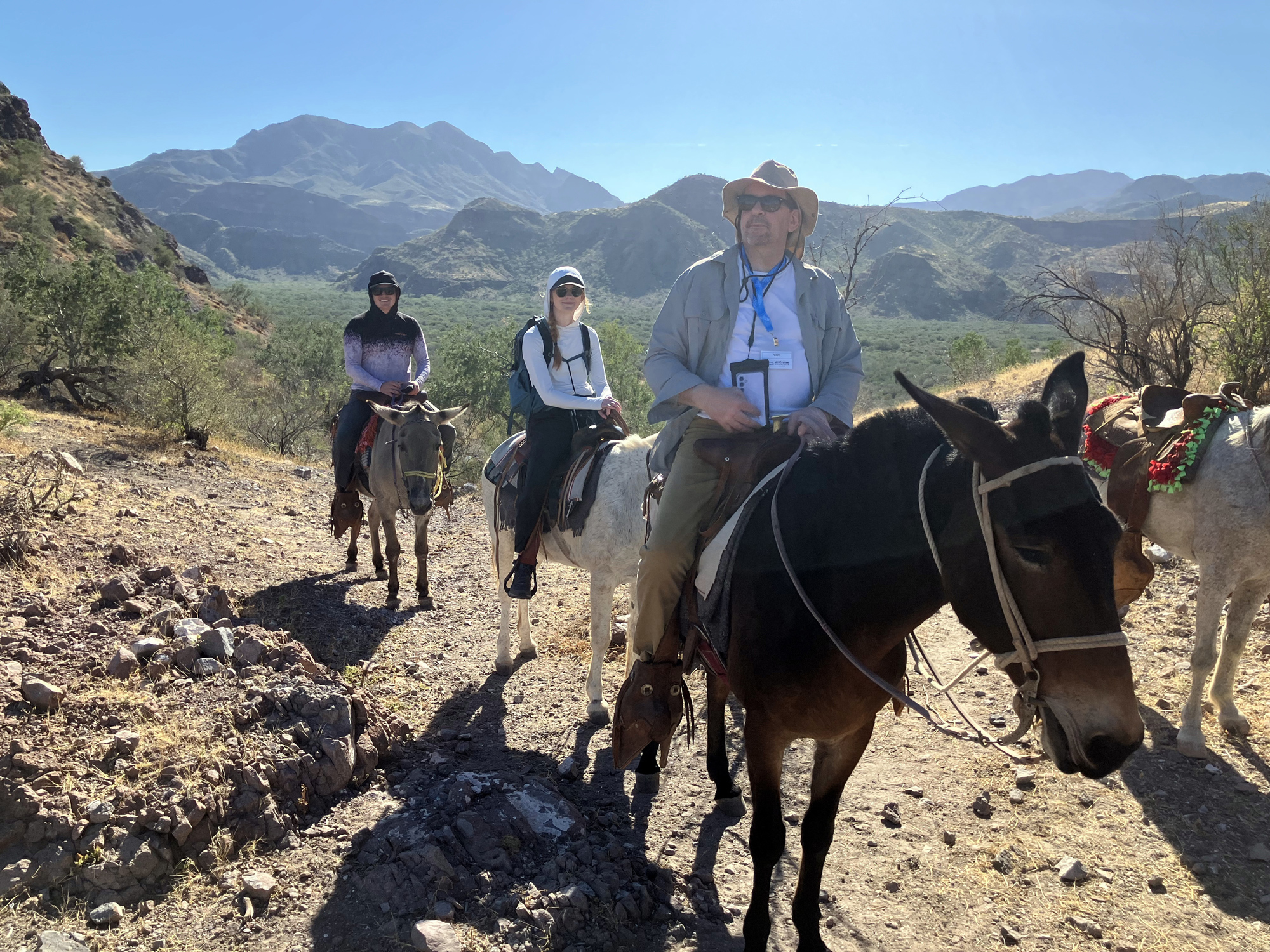
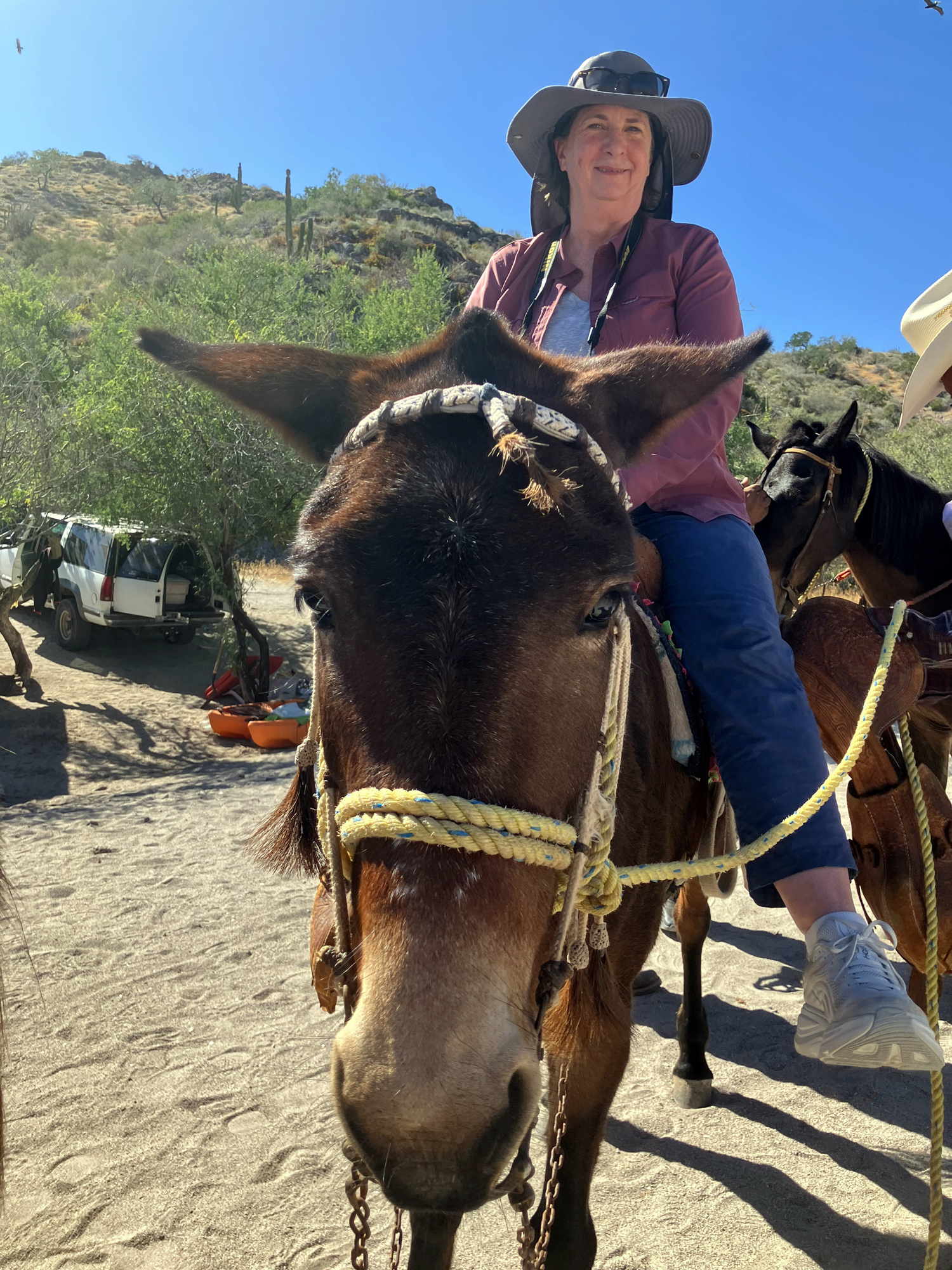
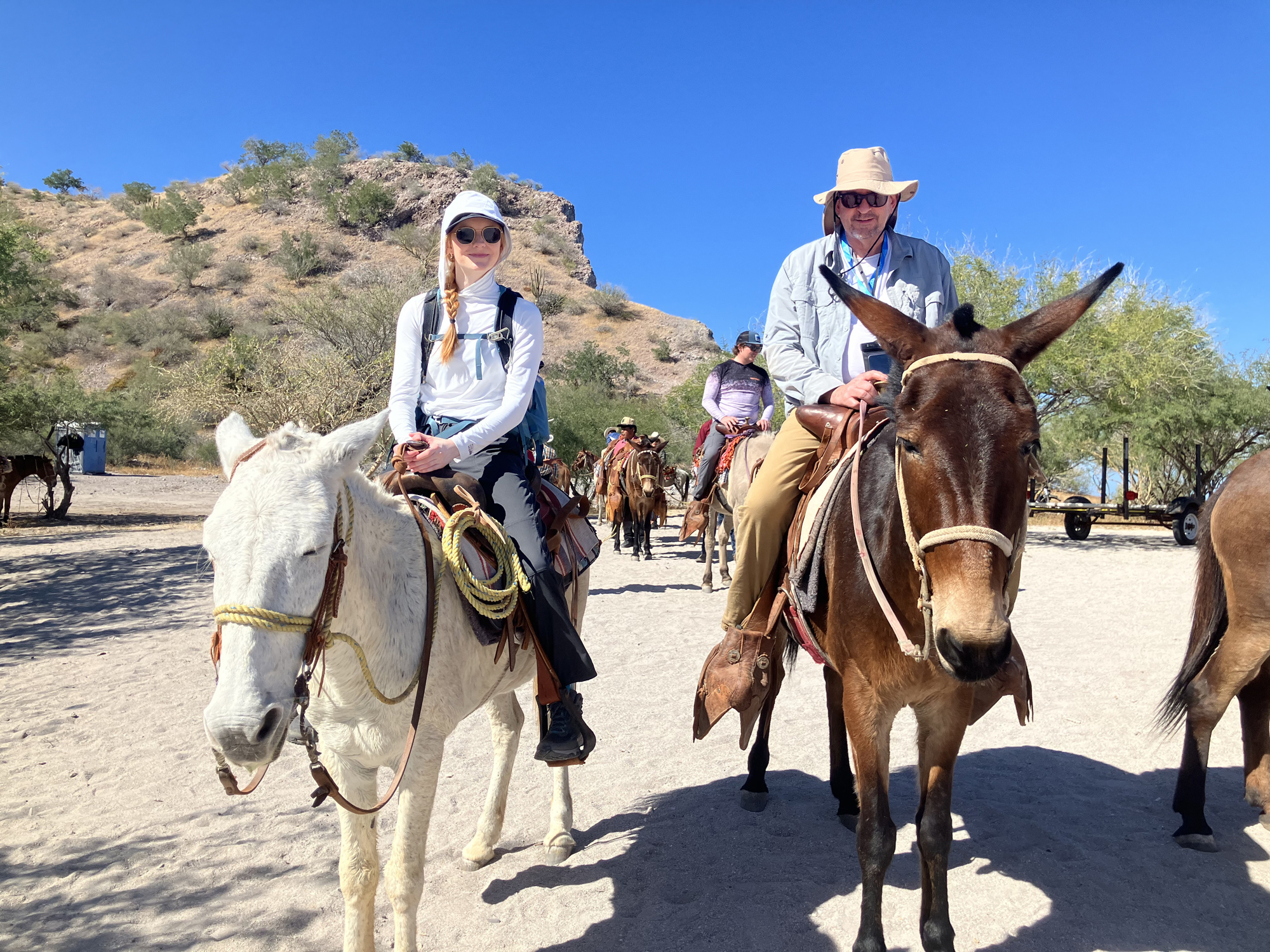
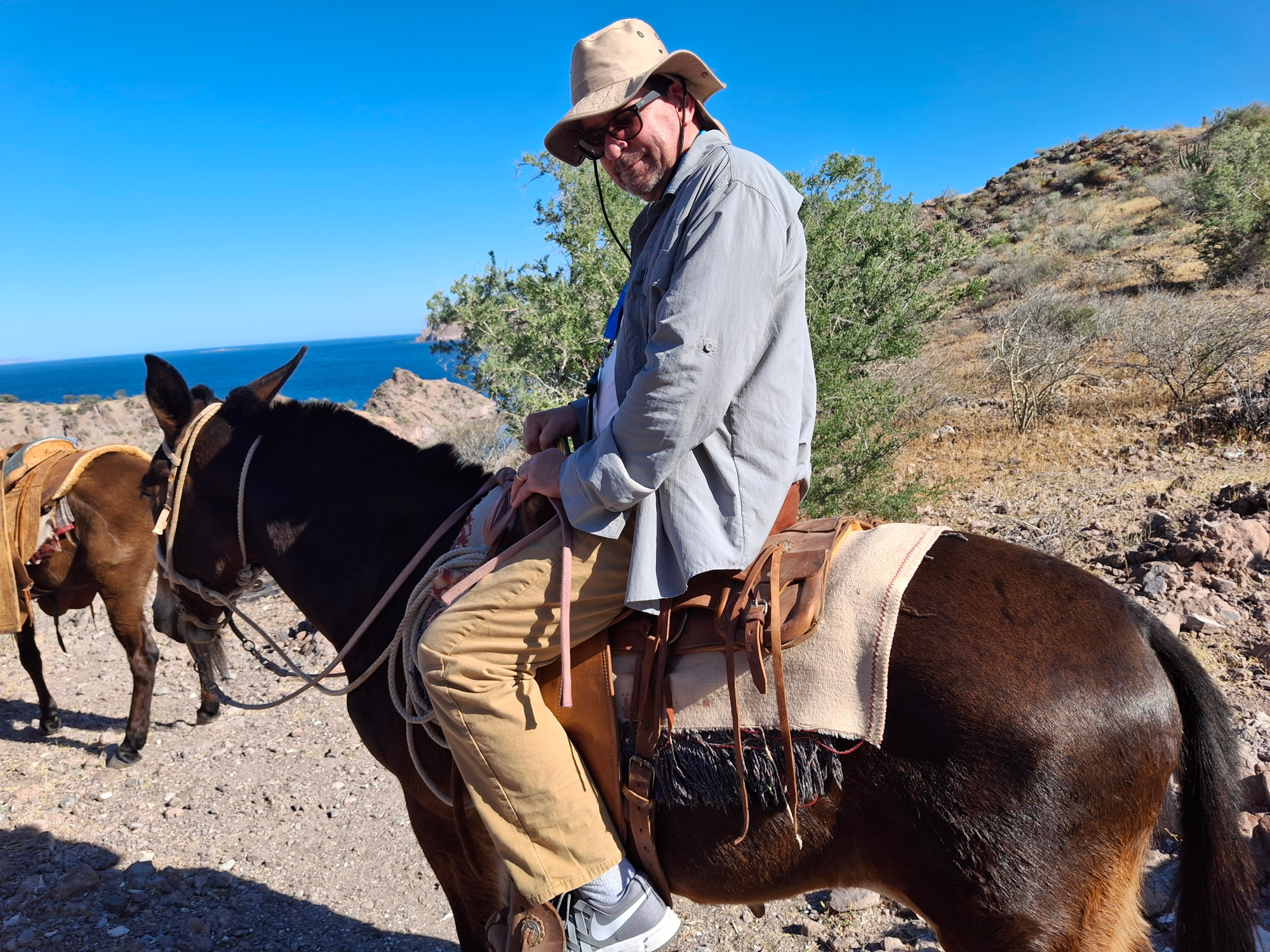
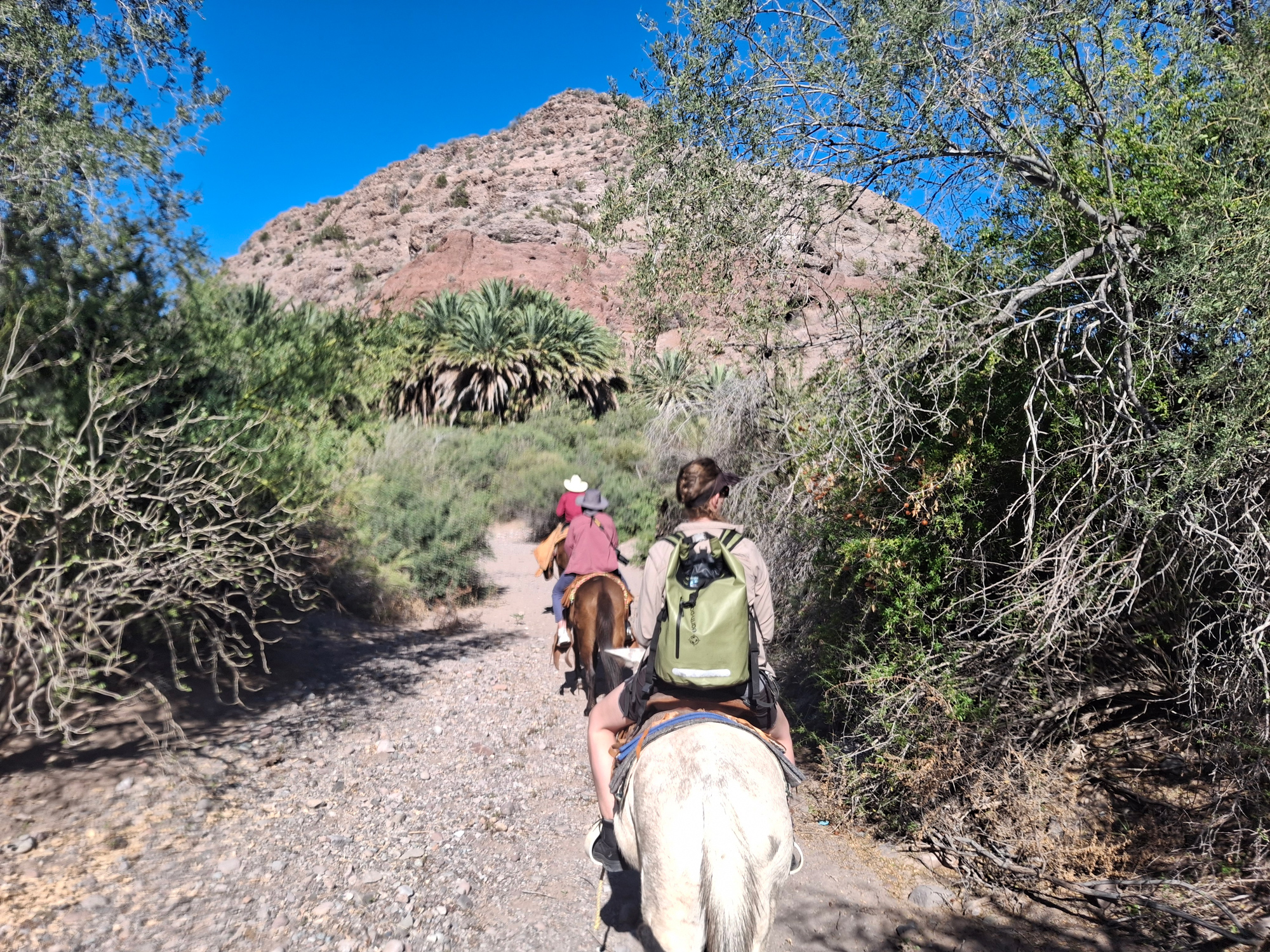
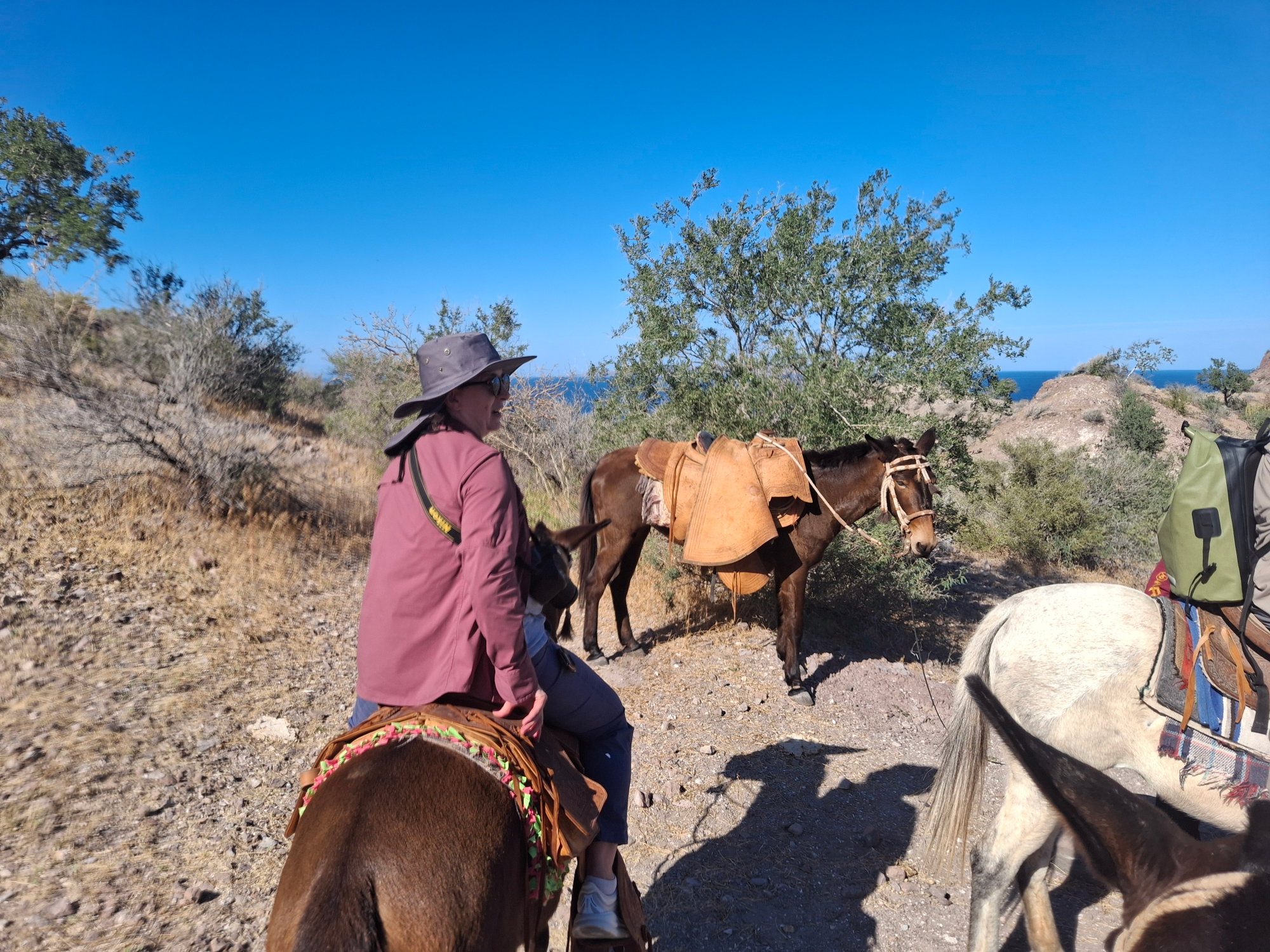
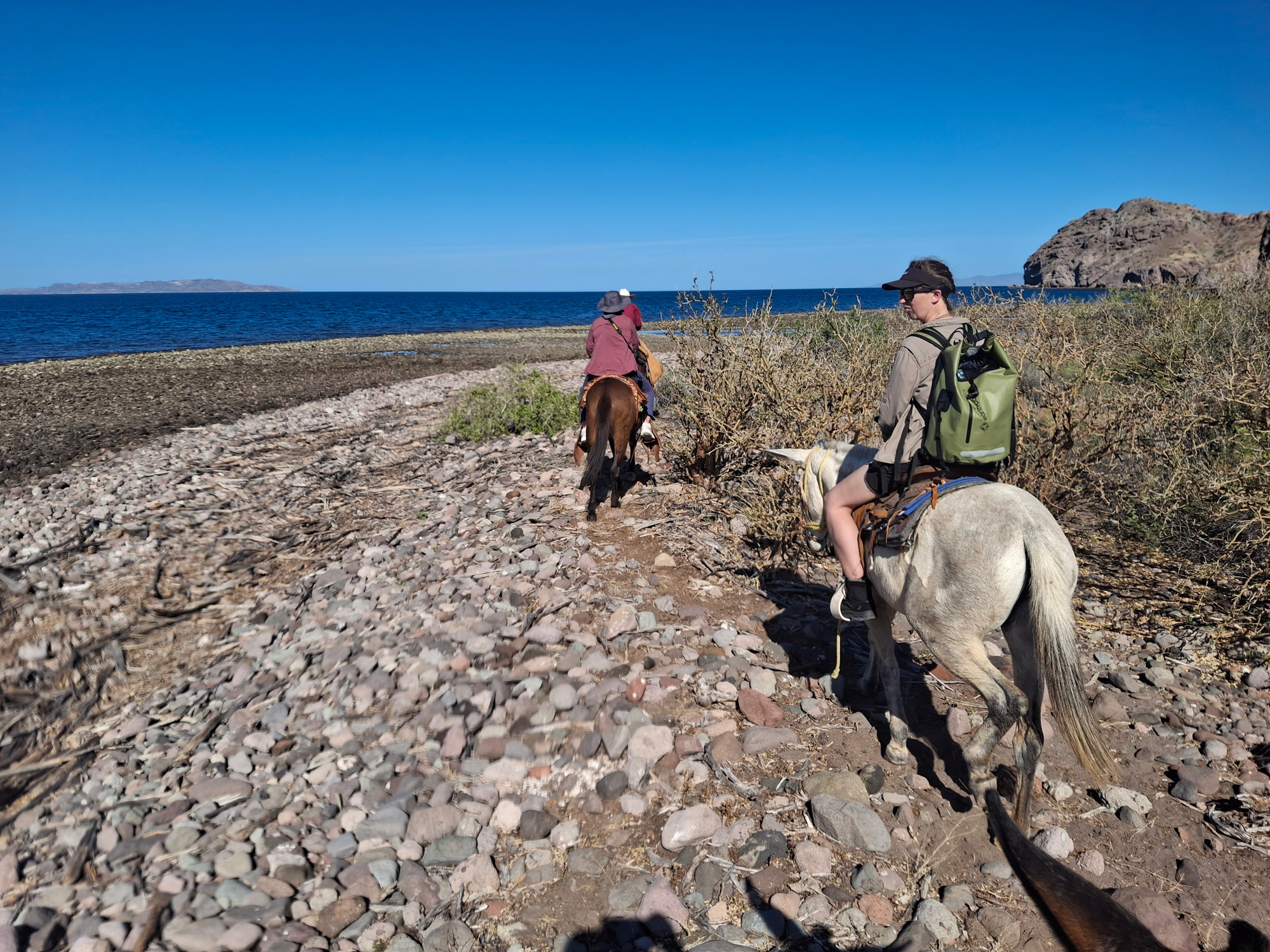
We’d both decided on the burro rides in the afternoon, since this would be the only location in the itinerary where they’re offered. The burros are owned by a local family of rancheros, who have had a relationship with Uncruise for over 20 years. They bring their burros down the night before and camp on the beach, then offer to take guests along the winding paths up into the arroyo above the coastline. The rancheros get to show off the otherwise-inaccessible countryside to a bunch of eco tourists, probably get a little cash, and the guests get an adventure unlike any other.
Being a burro ride, we don’t need to don any equipment other than our PFDs for the skiff ride into the beach, plus whatever sun-protection we want; hats, long sleeves, long pants, sun block. We just return to our cabin to put on some of the brand new 90 SPF UV shirts we’d bought for the trip, pick up our wide-brimmed hats, lather up with that sunscreen from the pharmacy in Cabo, and head out to the Aft 400 to meet up with our guide Mereth, and wait for our turn at a skiff.
Once back at the beach, the rancheros take their time to fit each passenger to an appropriate burro. There are three rancheros, the Romero brothers, who will act as guides for the journey, plus Mereth. They don’t speak a lot of English, but enough to let you know the name of the burro you’ll be riding. I mount up on a dark brown burro named Fatima, as Ricardo hands me the reigns; “right” (he tugs the reigns to the right), “left” (he tugs the reigns to the left), “reverso” (he tugs towards me). He then coils up a second rope, ties it to the front of the saddle, pats it, and says “brake” with a coy smile. We both laugh. It seems language of burro is universal.
Margaret is shown to another, lighter burro, and beside us is Bill, from Porthole Magazine. Bill asks if his mount is a boy or girl. His query jumps around the group like a game of telephone, finally getting translated into Spanish; “burro or burrita?” someone says to the rancheros, pointing at Bill. Richardo smiles and states “no burro, horse”. Seems Bill is the odd man out, and is riding a small Mexican horse. We all laugh again.
Once the entire group of 8 or 9 is atop their burros (and horse), we’re off up the narrow gravel road off the beach. The burros are relatively self-driving, though left to their own devices they will pause frequently to bend and eat the brush at the side of path. Margaret’s in particular does not seem to be happy unless his nose is buried in the backside of the lead burro. So we climb, largely single-file, each burro following the next like a line of elephants. The path narrows, and leads us up to the top of the ridge, and further into the land. Along the way, there’s much bird life perched on the top of trees and cacti; woodpeckers, grouse, even some desert hummingbirds.
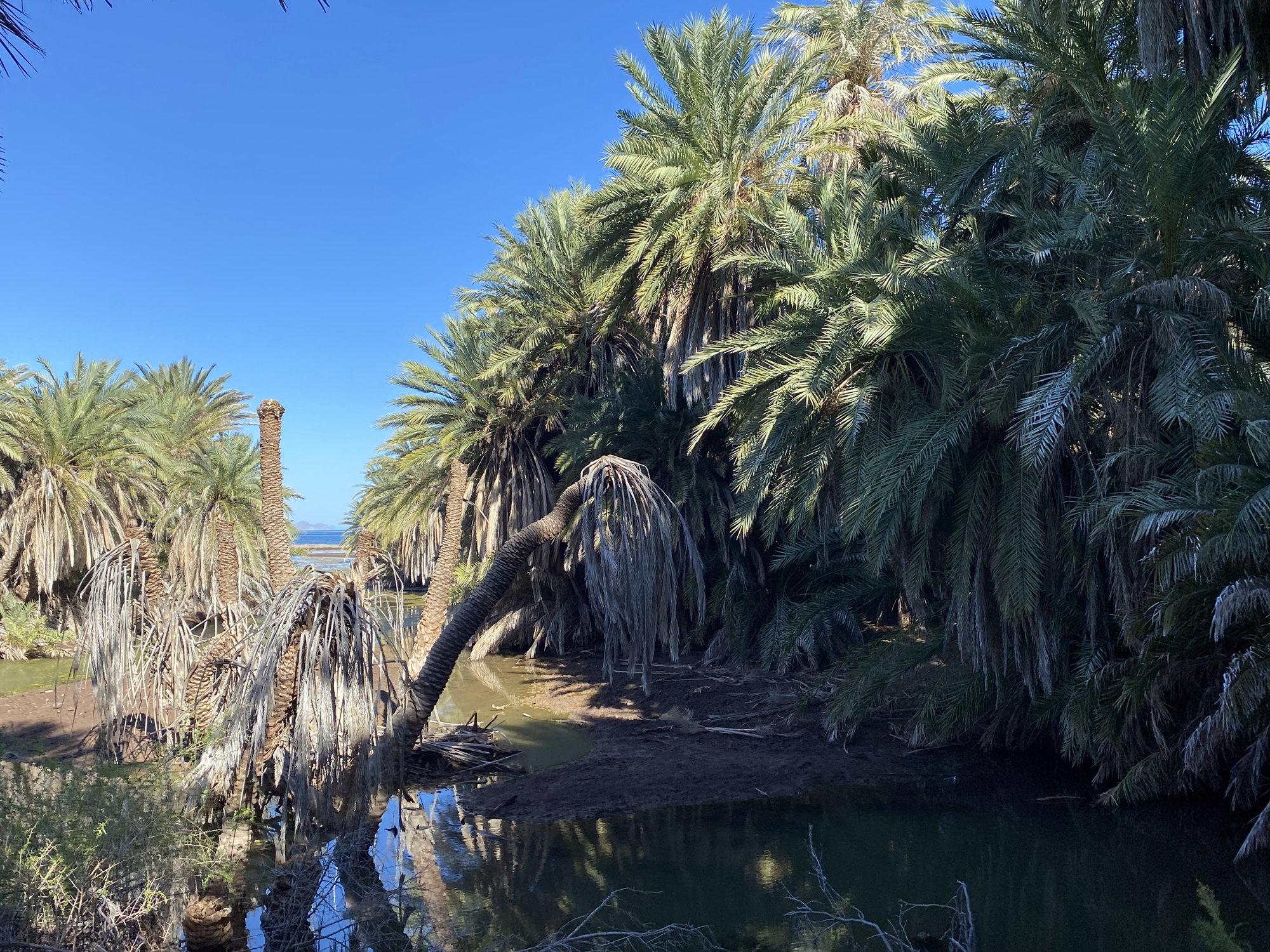
We pass by an old cemetery of what looks to be a family of settlers, the gravestones taking all sorts of forms from carved and etched rock, to painted adobe, to wooden crosses. A small, simple, wooden pole fence surrounds the site, but much of it has been overrun by nature. Further on, we cross down into what almost feels like a tropical rainforest standing like an oasis; a large pond of water, very humid, lots of palm trees, green bushes seemingly softer than the rest of the desert. We hear lots of different bird calls, there, but they all stay hidden. Once through the rainforest, we turn and make our way to the backside of the small peninsula, and open out onto a beautiful view across the inlet.
Continuing on, we finally arrive at the highest point on this side of the arroyo, looking down onto the beach we had left and out across the bay, the Safari Voyager a small speck from this distance. It is here that we pause for a few minutes, while Ricardo and the other brothers dismount and begin to check everyone’s saddles, cinching them tight. The reason is obvious, for after the Romeros have once again mounted up, they begin to lead us down the mountain. The trail here is steep and narrow, with loose gravel and shale under the burros hooves. We are mighty glad that we are on four legs, rather than just our two. We lean far back in the saddle, to make it easier for the animal. Every once in a while, a burro will slip a bit, but seem largely unphased by the uneven and somewhat treacherous terrain.
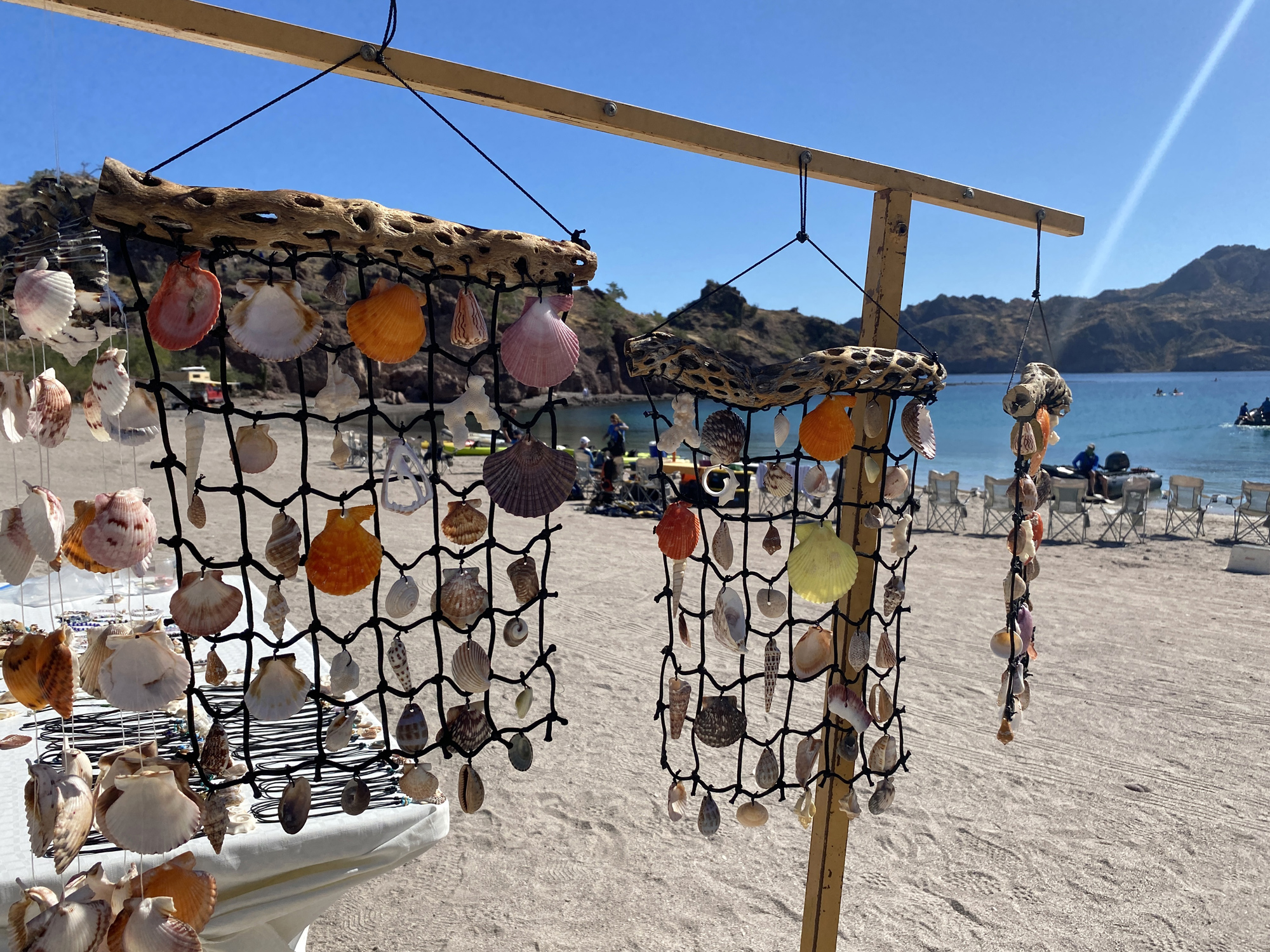
Ducking down to get under low-hanging branches, we arrive at the back of the beach, the rest of the Romero family walking in to help us down off these burros that have been our wonderful companions for the last 2 hours. Just ahead is a pop-up stand, where several of the Romeros are selling their beautiful and unique handmade shell and leather jewelry. We shop, buy a few trinkets, then head to the front of the beach, where Brooke has set up a full bar, with some green tea-infused rum lemonade, and other frozen concoctions.
Party on
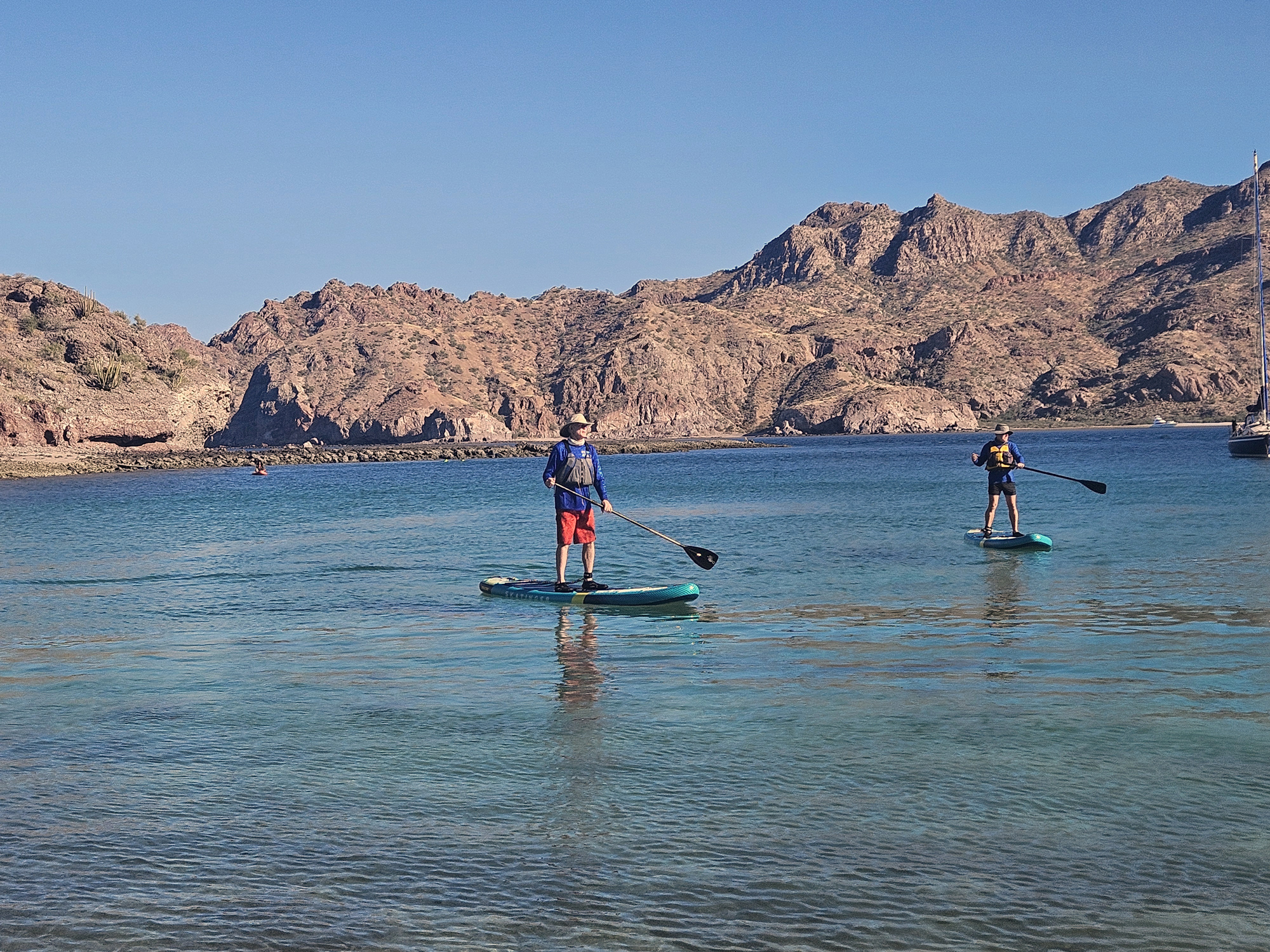
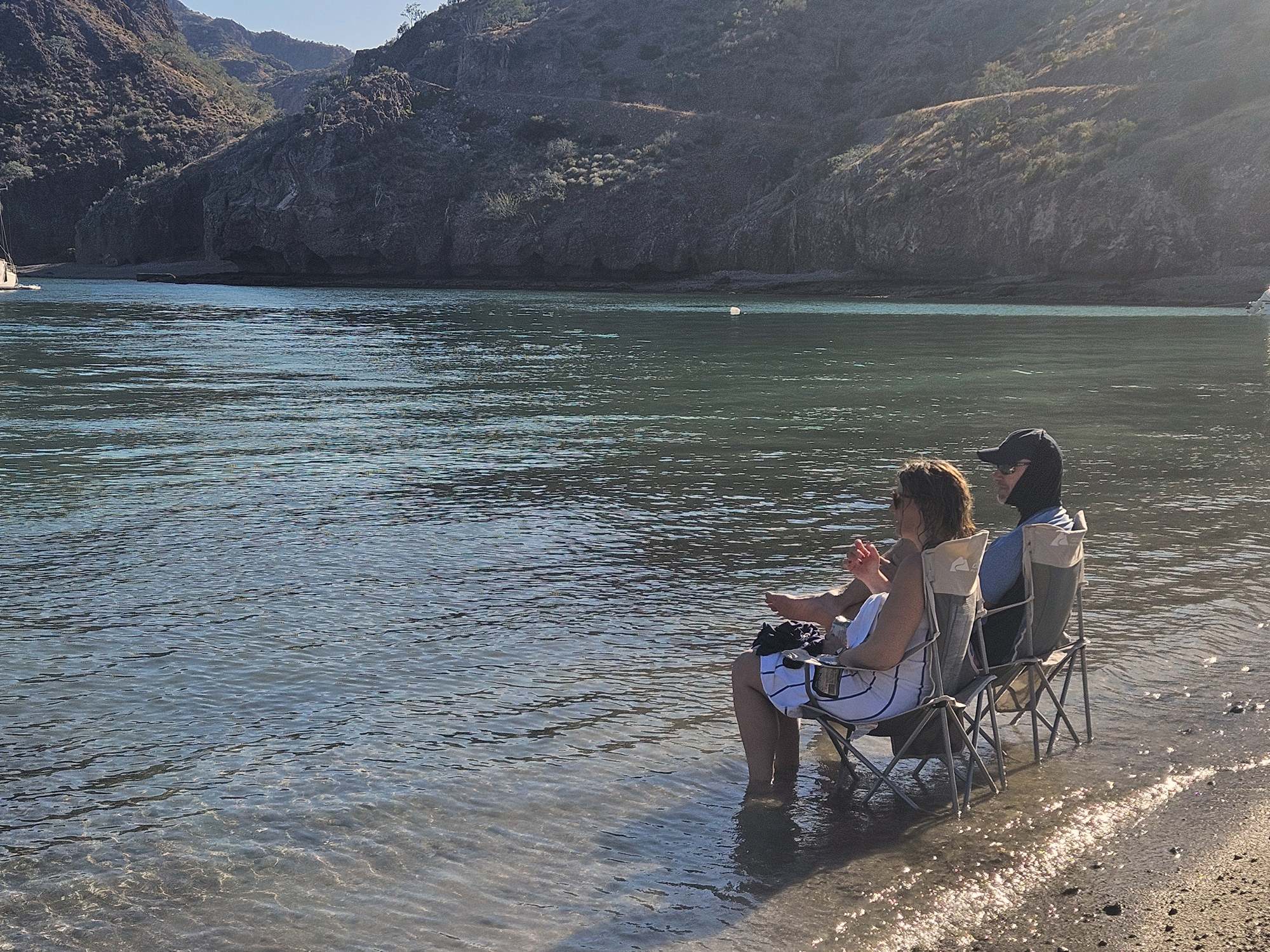
The beach party is in full swing, with folks out on stand-up paddleboards, kayaks, and some snorkeling toward the reef. Suddenly all of the expedition guides begin screaming for joy, as Layla, the beautiful white and tan pointer, saunters over to the beach chairs. Layla had apparently lived on the beach, abandoned, for several years, and the guides had gotten to know her, before she was adopted through their efforts by a young couple. She now travels the world with the couple in their old VW camper, living her best life. The couple treks back to “Layla’s Beach” once a year, to give her a taste of home. She just happened to be visiting this week, and gives each guide lots of licks on sight… and, really, anyone else she sees.
Late afternoon, and the crew begin to pack up the beach party. They lash all the kayaks together and haul them in one long train back to the ship. Then there are skiffs for the passengers, every 15 minutes or so, whenever we’re ready to return. There is no hurry. But it’s been a day of a lot of sun, and I’m feeling pretty worn out, so I take one of the earlier skiffs back, leaving Margy to enjoy a little more of the beach party.
This is not a drill!
When Margaret returns 45 minutes later, she goes right to the shower to wash off the burro and hike. Suddenly there is a strong knock at the door.
“Oh shoot, I forgot to move my magnet!” Margy calls out from the shower.
I open the door to face a stern Mereth. “Did she make it back?”
“Yes, she’s in the shower, she just realized she forgot her magnet.”
“206 location confirmed. Repeat, 206 found.” Mereth calls into the radio. She escorts me out to the Aft 200, where I move Margy’s magnet to “Aboard”.
“We’re good, all passengers accounted for, ” Mereth continues on the radio.
“Sorry about that”
Just a reminder of how important those magnets are for the ship’s crew to ensure passenger safety, and how seriously they consider the responsibility.
Burro Bites and tomorrows activities
Happy Hour rolls around, Brooke has made her specialty drink-of-the-day - nicknamed a “Burro Bite” - that is something something tequila and something. Yes please! It goes down almost too easy, after a long hot day.
Next up, the 6 O’clock News. Captain is still anticipating only light winds, good weather and calm seas, so they’ve decided we’ll travel about 2 hours north to the island of Monserrat while we're at dinner and anchor at the northern coast called Yellowstone Beach. Then, as a surprise, he’s heard from several other Captains in the area that there have been whales spotted to the south of Monserrat, so we’ll have morning activities at Yellowstone Beach, but then pull up anchor, and spend the afternoon “cruising for critters”. It’s not something that they’re able to do often due to weather, but he thinks it will be worth it. “If it turns out great, it’ll be my idea… and if it turns out badly, it’ll still be my idea”.
Terra outlines the morning activities available at Monserrat; an Arroyo Hike, another Hard Charger Hike up the mountain, snorkeling, or a skiff tour. We decide to do the snorkeling together, since the Snorkeling 101 went off so well.
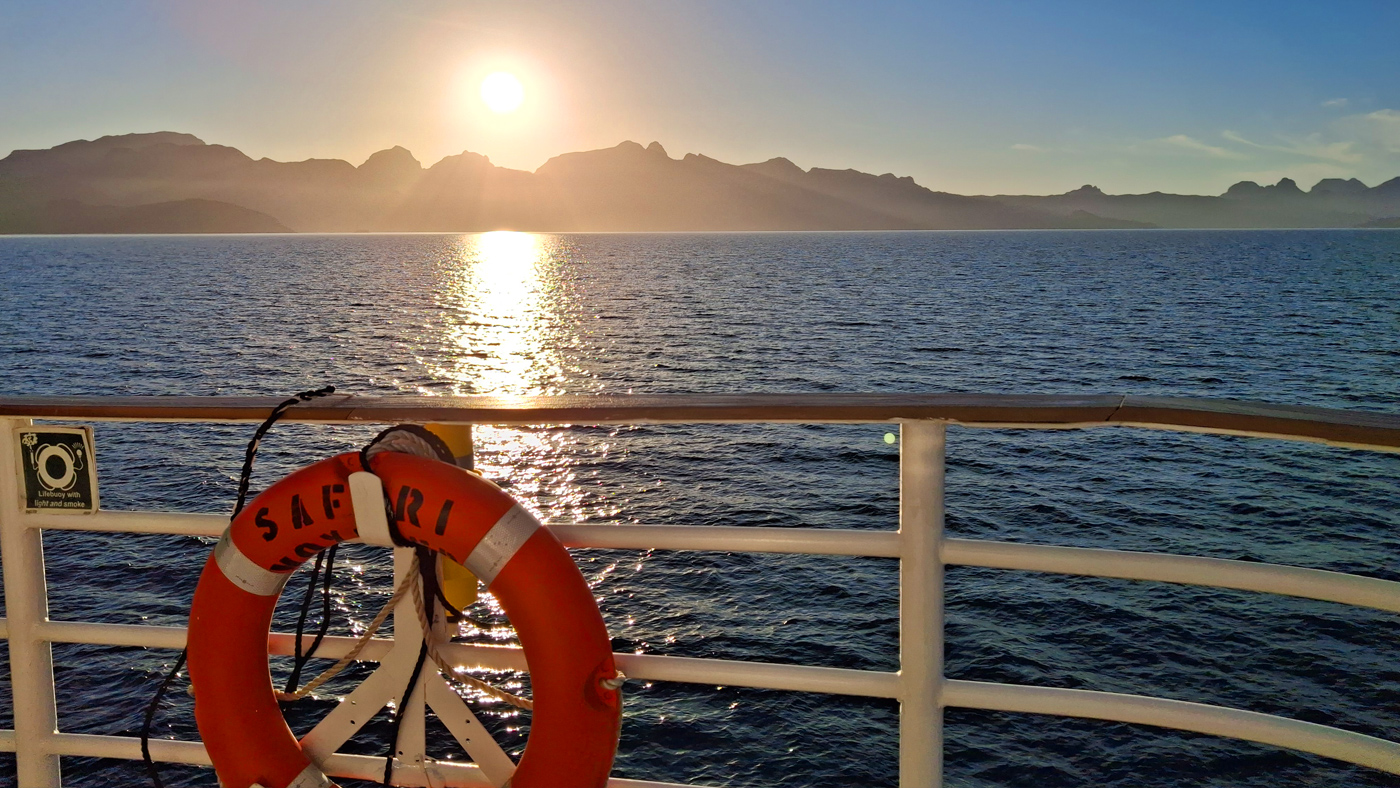
As the sun sets a brilliant orange over the mountains around Agua Verde, we remember how it felt to ride the burros along that ridgeline just hours before, and then it’s down to dinner as we hear the crew pull anchor and the ship’s engines come alive for the trip to Yellowstone Beach.
The dinner selections are Chicken Mole, Mahi Mahi, or a veggie enchilada. And we settle in for some wonderful conversation with Sharon & Paul, and Catherine & Mike as we talk about our various musical families, instruments played, songs sung, and more.
Tonight's after-dinner presentation is from Daniel, all about his deep passion for the birds in Baja Norte and Baja Sur, including lots of his own spectacular photography. To look at Daniel you wouldn’t guess he’s a bird guy, and he’ll tell you he wasn’t at first… but the more he learned about birds the more fascinated he became.
